01
IT and digital transformation
Need to keep Microsoft 365 while changing the key-control model.

Retain full M365 usability and access with sovereign encryption for your administration.
Who it is for
01
Need to keep Microsoft 365 while changing the key-control model.
02
Need a clear answer when auditors ask whether Microsoft can decrypt alone.
03
Need DKE for high-sensitivity labels and a decision path versus Customer Key.
Nov 2025
Swiss guidance raised the bar: provider-accessible keys are no longer acceptable for sensitive or legally confidential data in M365.
US CLOUD Act
Swiss/EU hosting doesn’t remove extraterritorial access risk when the provider is a US entity.
Double Key Encryption
Keep the decisive key outside Microsoft to exclude provider access, while preserving Microsoft 365 usability.

Swiss guidance has made the decision criterion explicit (source): if the cloud provider can technically access decryption keys, protection is not sufficient for sensitive personal data or data under a legal duty of confidentiality.
That decision point applies to typical Microsoft 365 deployments, where encryption remains dependent on keys Microsoft can operate, even when customer-managed options are enabled.
How it works
DKE requires Microsoft’s key and your external key. Microsoft never holds the external key. DuoKey provides that external key service with MPC-backed custody.

Map sensitive personal data and legally confidential categories in the tenant.
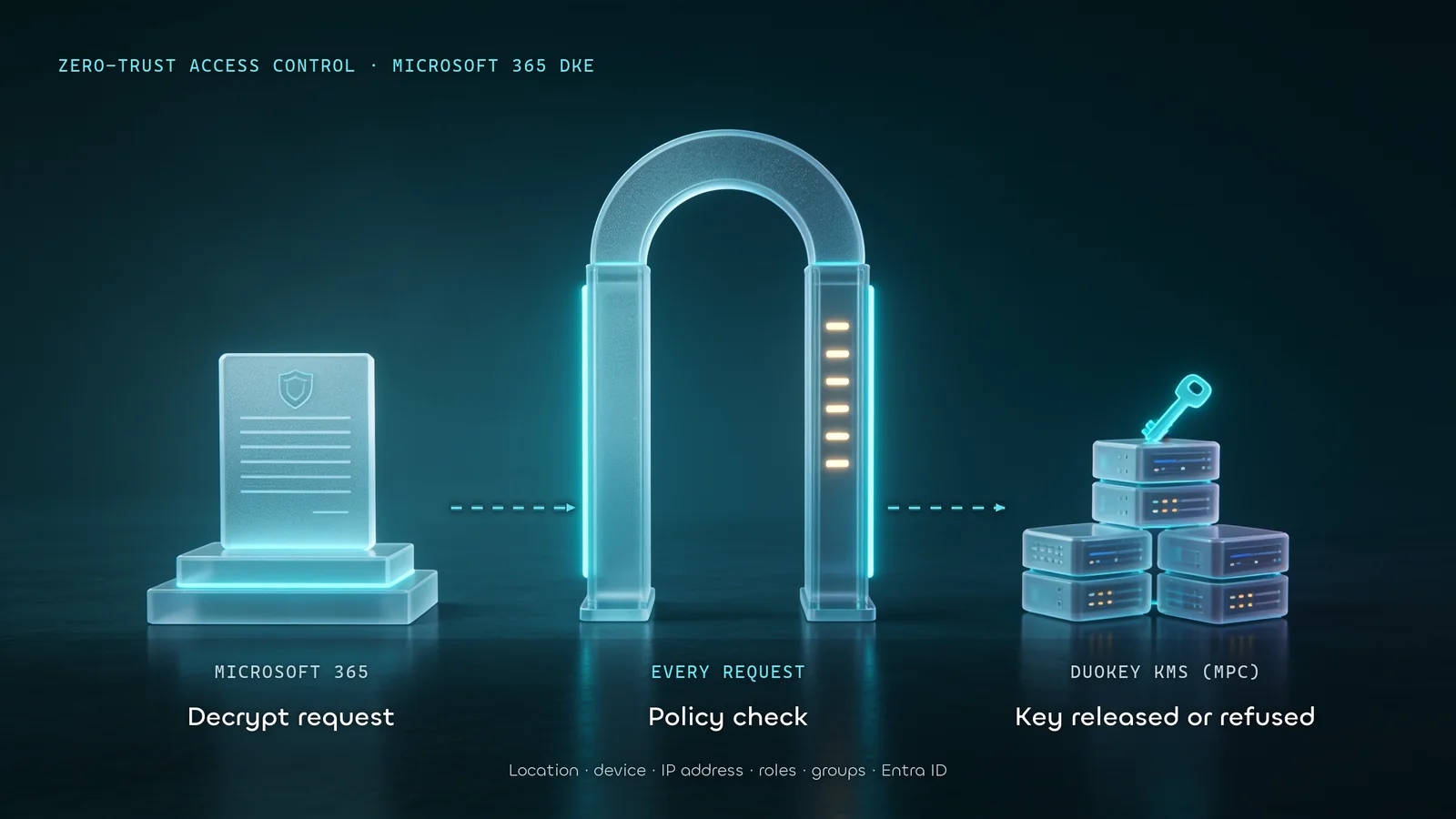
Protect labelled content so both keys are required to decrypt.

Use Customer Key for broader service encryption when DKE scope is not required for every workload.
Across “standard” Microsoft 365 encryption setups, protection ultimately depends on keys that remain within Microsoft’s operational control. That means there is no strict technical separation between the encrypted data and the ability to decrypt it, so the provider can retain a path to cleartext access, an issue for sensitive and legally confidential categories in the Swiss public sector.

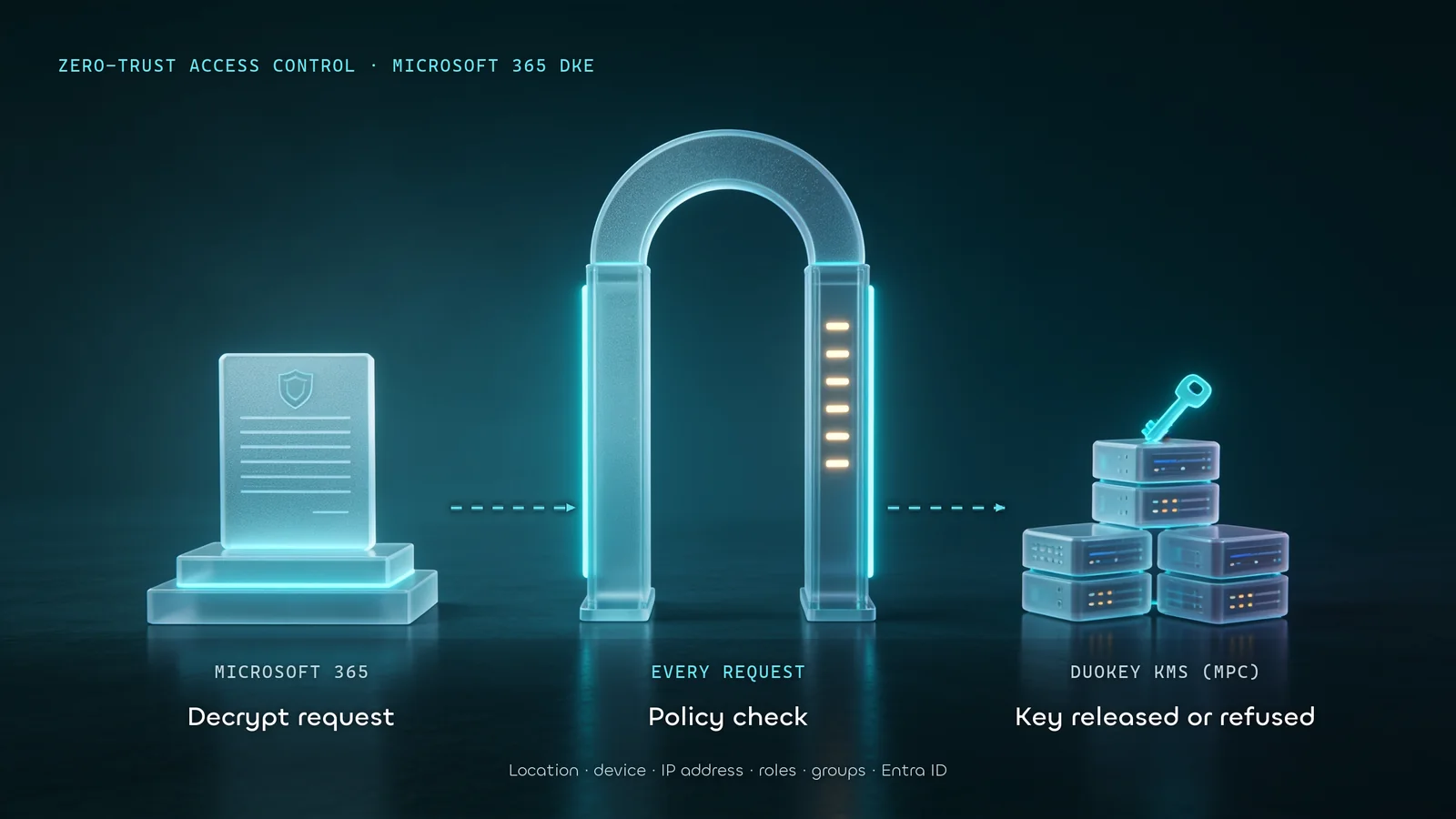
Double Key Encryption (DKE) is explicitly referenced in Swiss discussions as an example of encryption that is effective against the cloud provider. DKE relies on two distinct keys.
DKE establishes strict technical separation between encrypted content and the decisive decryption key.
Align M365 usage with Swiss confidentiality and data protection expectations, without sacrificing productivity.
Keep the decisive key outside Microsoft, preventing provider access to cleartext data.
Address the post-2025 compliance bar for sensitive personal data and legally confidential information.
Preserve core Microsoft 365 workflows while strengthening cryptographic control.
Next step
Bring the constraint. We’ll map the shortest practical path.
Whether you have already migrated or are planning a migration, you can integrate a compliant encryption architecture and maintain full M365 functionality.
Trust
Customer programmes